
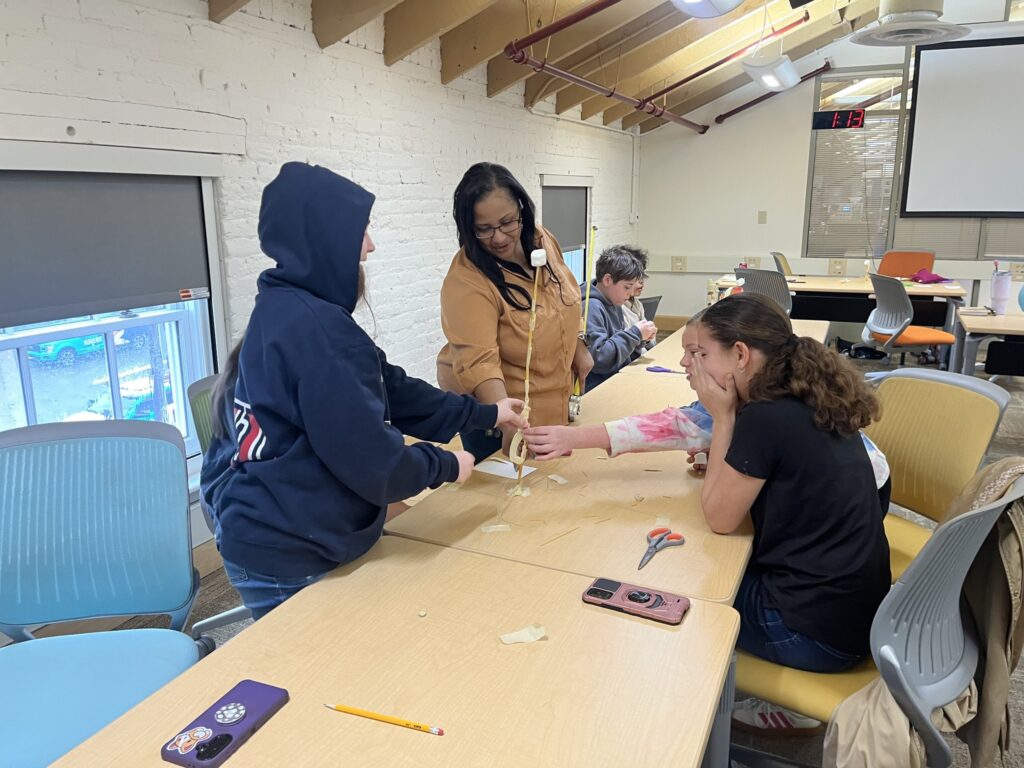
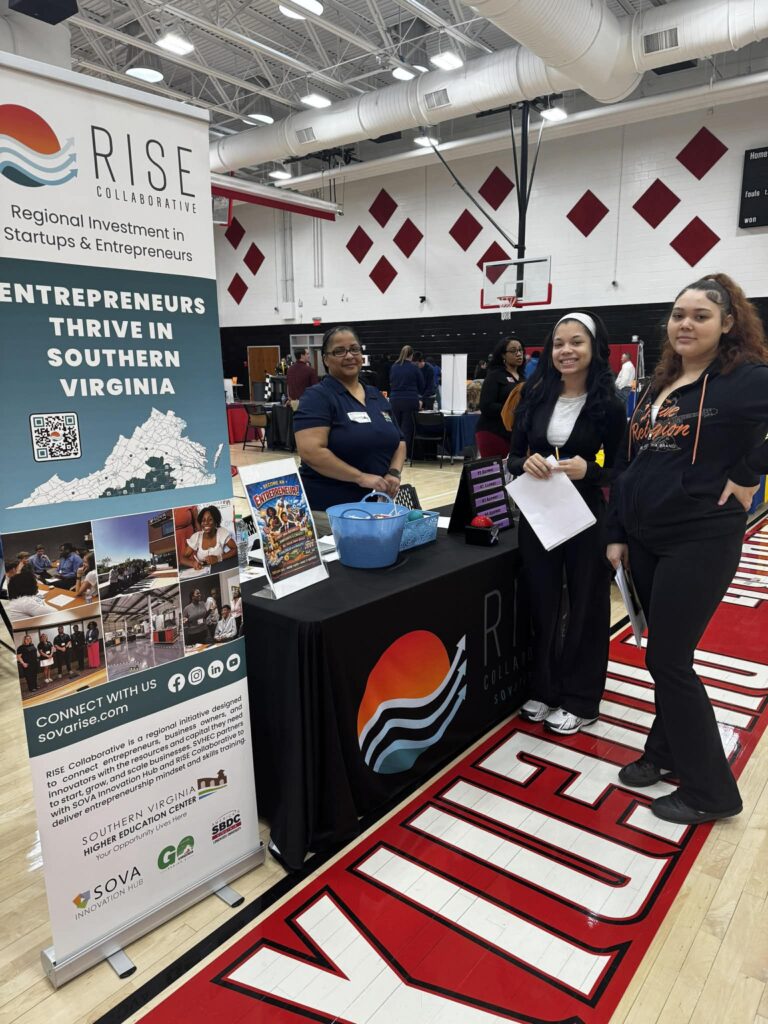
The Southern Virginia Higher Education Center (SVHEC) in partnership with the SOVA Innovation Hub and RISE (Regional Investment in Start-ups and Entrepreneurs) is expanding access to entrepreneurship education for middle and high school students across Southern Virginia.
Thanks to funding from RISE, SVHEC has welcomed experienced educator Jocelyn Forest as the regional Entrepreneurship Education Coordinator. In this role, Forest is leading efforts to bring entrepreneurship training to students across the GO Virginia Region 3 footprint—spanning a large geographic area from Patrick County in the west to Brunswick County in the east and Cumberland County in the north. Since fall 2025, Forest has introduced entrepreneurship and design thinking to nearly 200 students (public, private, and homeschooled) and engaged an additional 800 students at regional career fairs.
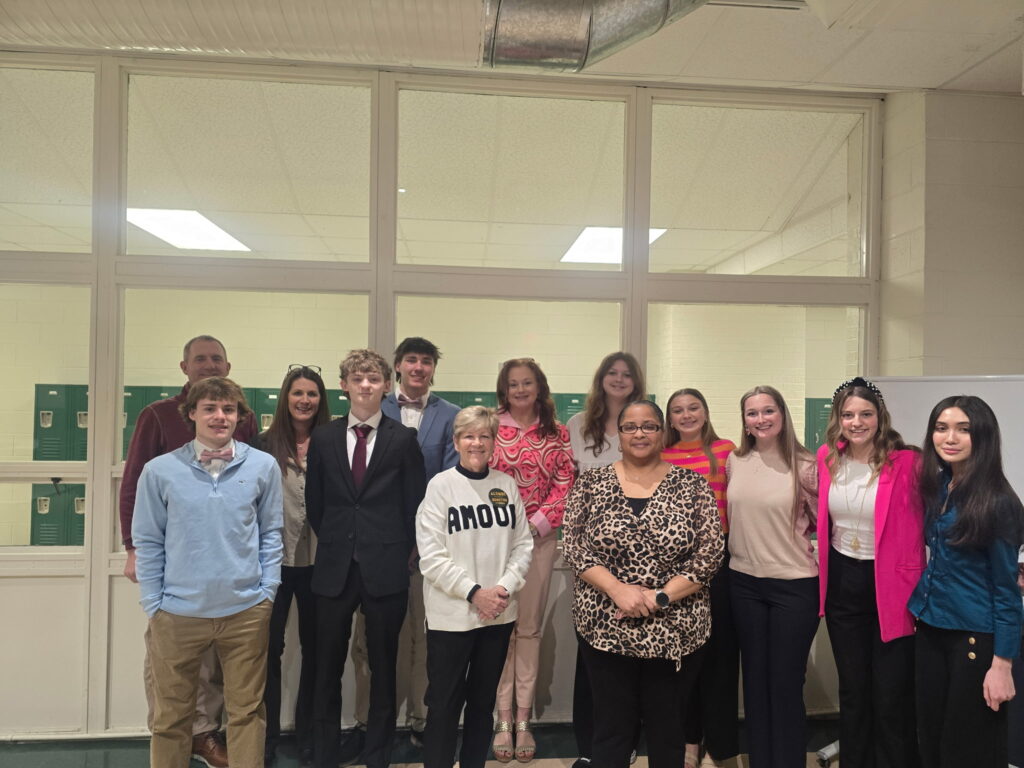
“The entrepreneurism workshop was both relevant and immediately applicable to the work our students have been developing throughout the year. Jocelyn’s presentation gave them tangible next steps and encouraged them to think like true entrepreneurs — considering impact, structure, and long-term viability. The students thoroughly enjoyed their time with her, and more importantly, they left feeling energized and challenged to think beyond simply completing a project” said Kristin Hite Capstone Class instructor at Kenston Forest School in Blackstone, VA.
The initiative uses the CO.STARTERS Generator curriculum, a flexible, hands-on approach to learning the fundamentals of entrepreneurship. Students explore how businesses work, develop problem-solving and creative thinking skills, and engage with topics like marketing, business finance, and customer discovery. Forest is available to delivery entrepreneurship education in a number of flexible formats including one-time workshops, delivering a multi-week workshop series, or working with educators to support them in integrating entrepreneurship into their existing curriculum.
Designed for students in grades 6–12 (public, private, or homeschooled), this module-based program fits seamlessly into existing classes–from accounting and english to culinary arts and the trades–with no business background required from educators. Clubs like FBLA, DECA, and STEM-related clubs and student organizations can also integrate the modules into meetings and club activities. Educators and club leaders can integrate the entire entrepreneurship curriculum or individual modules to supplement their existing programming.
Topics and skills include:
- Design Thinking
- Problem-Solving
- Marketing
- Basics of Finance
- Introduction to Entrepreneurship
- From Idea to Action: Getting Started in Business
- How to Finance Your Small Business